

 COA
COA
What is Sermorelin?
Sermorelin is a synthetic peptide derived from the N-terminal active region of endogenous growth hormone–releasing hormone (GHRH). Structurally, it corresponds to the first 29 amino acids of the native hypothalamic hormone, representing the shortest fragment known to retain full biological activity for receptor interaction. In experimental systems, sermorelin functions as an agonist of the growth hormone–releasing hormone receptor (GHRH-R) located on pituitary somatotroph cells, where it is used to investigate regulatory processes governing growth hormone signaling pathways. [1]
Binding of sermorelin to the GHRH-R activates intracellular signaling pathways associated with cyclic adenosine monophosphate (cAMP) generation and downstream endocrine signaling cascades that regulate growth hormone release in laboratory models. Through this mechanism, the peptide provides researchers with a tool for studying receptor activation dynamics, hypothalamic–pituitary signaling interactions, and feedback regulation within the growth hormone axis. [2]
Because sermorelin consists only of the biologically active receptor-binding region of GHRH, the truncated peptide retains the ability to interact with the receptor while offering a simplified molecular structure for experimental investigation of peptide–receptor interactions and endocrine signaling mechanisms. This design allows researchers to examine the molecular steps involved in GHRH-mediated signaling, including receptor binding affinity, intracellular second-messenger activity, and downstream hormone-regulating pathways.
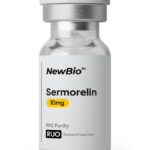
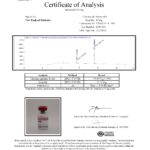
At NewBioRx, our 10mg sermorelin peptide for sale is synthesized using controlled solid-phase peptide synthesis (SPPS) to assemble the 29-amino-acid sequence with high precision. Following synthesis, the peptide undergoes high-performance liquid chromatography (HPLC) purification to remove truncated sequences and synthesis byproducts, resulting in >99.9% verified purity. Additional analytical methods, including mass spectrometry identity confirmation, are used to verify sequence integrity and molecular composition.
Each batch is also verified through analytical quality control procedures, and Certificates of Analysis (COAs) provided for transparency and traceability in laboratory research applications.
Note: This material is supplied for research use only and is not intended for diagnostic, clinical, or therapeutic use.
Sermorelin Chemical Identity
Sermorelin is a synthetic peptide classified as a truncated analog of growth hormone–releasing hormone (GHRH). The molecule corresponds to the N-terminal 29 amino acid segment of the endogenous hypothalamic peptide GHRH (1–44), which contains the primary receptor-binding domain responsible for activating the growth hormone–releasing hormone receptor (GHRH-R).
As a peptide fragment, Sermorelin retains the structural elements necessary for receptor interaction while lacking the full-length C-terminal region of the native hormone. This truncated structure enables controlled investigation of GHRH receptor activation and intracellular signaling pathways in biochemical and cellular research systems.
Chemical Properties and Registry Information for Sermorelin
The following chemical identifiers describe the molecular composition and registry information associated with this compound for laboratory research.
| Property | Value |
| Name & Synonyms | Sermorelin; GHRH (1–29); Growth Hormone Releasing Hormone Fragment |
| PubChem CID | 16132413 |
| CAS Number | 86168-78-7 |
| Molecular Formula | C149H246N44O42S |
| Molecular Weight | 3357.93 g/mol |
| Peptide Length | 29 amino acids |
| Compound Class | Synthetic peptide analog |
| Primary Targets | Growth hormone–releasing hormone receptor (GHRH-R) |
| InChIKey | WGWPRVFKDLAUQJ-MITYVQBRSA-N |
| IUPAC Name |
L-tyrosyl-L-alanyl-L-alpha-aspartyl-L-alanyl-L-isoleucyl-L-phenylalanyl-L-threonyl-L-asparagyl-L-seryl-L-tyrosyl-L-arginyl-L-lysyl-L-valyl-L-leucyl-glycyl-L-glutaminyl-L-leucyl-L-seryl-L-alanyl-L-arginyl-L-lysyl-L-leucyl-L-leucyl-L-glutaminyl-L-alpha-aspartyl-L-isoleucyl-L-methionyl-L-seryl-L-argininamide
|
|---|
These identifiers facilitate compound indexing, database cross-referencing, and standardized chemical identification in biochemical and molecular research environments.
Chemical Structure
2D Structure

3D Structure

Sermorelin Research Applications
Sermorelin is widely used in laboratory and preclinical research as a defined GHRH receptor agonist for studying endocrine signaling, hypothalamic–pituitary communication, and the physiological regulation of growth hormone pathways. Because it corresponds to the biologically active GHRH(1–29) region, the peptide provides a controlled tool for examining how receptor activation influences downstream endocrine signaling networks in experimental models.
Body Composition & Metabolic Health
Experimental and clinical research investigating the growth hormone axis frequently examines how GHRH-mediated signaling influences metabolic regulation and body composition pathways. Studies evaluating growth hormone–releasing peptides indicate that activation of the GH/IGF-1 axis can alter lipid metabolism, protein turnover, and energy utilization in endocrine models.
Research exploring sermorelin and related GHRH analogs has been used to investigate how stimulation of endogenous growth hormone signaling influences lipolysis, amino-acid transport, and protein synthesis pathways involved in skeletal muscle and adipose tissue metabolism. Experimental observations in endocrine studies suggest that GH-dependent signaling can influence fat metabolism and lean tissue maintenance, making sermorelin a useful peptide tool for examining metabolic signaling networks associated with the growth hormone axis. [1][2]
Muscle Growth & Exercise Performance
Sermorelin is also used in research examining the relationship between growth hormone signaling and skeletal muscle physiology. Activation of the GH/IGF-1 axis has been shown in experimental systems to influence pathways involved in muscle protein synthesis, nitrogen retention, and tissue remodeling.
Mechanistic studies of insulin-like growth factor signaling indicate that IGF-1 functions as a key mediator of growth hormone activity within skeletal muscle tissue, regulating cellular growth, differentiation, and protein turnover. Investigations into the neuroregulation of growth hormone secretion further demonstrate that pulsatile GH signaling plays an important role in maintaining endocrine control over muscle metabolism, tissue repair processes, and systemic energy balance. These experimental findings have positioned GHRH-derived peptides such as sermorelin as research tools for studying musculoskeletal signaling and endocrine regulation of metabolic stress responses. [3][4]
Cardiovascular Protection & Tissue Repair
Preclinical research has also explored how GHRH receptor signaling may influence tissue repair mechanisms, particularly in cardiac injury models. Studies investigating GHRH agonists in rodent models of myocardial infarction have reported changes in cardiac remodeling pathways, inflammatory signaling, and vascular density within injured myocardial tissue.
In one experimental model, treatment with a GHRH receptor agonist following myocardial infarction was associated with reduced infarct size and increased vascularization within cardiac tissue, alongside activation of progenitor cell populations involved in tissue regeneration. Related studies have observed modulation of inflammatory cytokines and signaling pathways involved in fibrosis and cellular survival. These findings suggest that GHRH receptor activation may interact with cellular repair pathways and angiogenic signaling networks in damaged tissue within experimental systems. [5][6][7]
Sleep Quality & Circadian Rhythm Regulation
The interaction between growth hormone secretion and sleep architecture represents another established area of endocrine research. Physiological studies have demonstrated that growth hormone release is strongly associated with slow-wave sleep stages, where the largest endogenous GH pulses typically occur.
Experimental work examining the neuroendocrine regulation of sleep indicates that GHRH signaling contributes to the coordination of sleep-related endocrine rhythms, including interactions between hypothalamic peptides and circadian regulatory systems. Because sermorelin acts as a GHRH receptor agonist, it has been used in research settings to investigate how GHRH-mediated signaling influences the relationship between sleep physiology and endocrine hormone release patterns. [8]
Bone Density & Skeletal Health
Growth hormone signaling also plays an important role in bone metabolism and skeletal remodeling, making the GH/IGF-1 axis a frequent subject of experimental endocrine research. Studies examining GH regulation have demonstrated that growth hormone and IGF-1 influence osteoblast activity, bone matrix formation, and mineral metabolism in laboratory and clinical models.
Research into the neuroregulation of GH secretion has further highlighted the importance of hypothalamic control over bone remodeling pathways, with the GH/IGF-1 axis influencing bone turnover dynamics and skeletal tissue maintenance. These mechanistic relationships have led researchers to use GHRH-related peptides such as sermorelin when investigating endocrine regulation of skeletal physiology and bone-cell signaling pathways. [4][9]
Anti-Aging & Longevity Research
The age-associated decline in growth hormone secretion (commonly referred to in endocrine literature as somatopause) has been widely studied as part of research into hormonal changes during aging. Physiological studies indicate that growth hormone secretion decreases progressively across adulthood, accompanied by alterations in body composition, metabolic regulation, and endocrine signaling.
Within this context, GHRH analogs such as sermorelin are used in experimental settings to examine mechanisms regulating growth hormone secretion patterns and hypothalamic–pituitary signaling during aging. Research in this area focuses primarily on understanding how hormonal signaling pathways change over time and how endocrine feedback systems regulate the growth hormone axis under different physiological conditions. [1]
Cognitive Function & Neuroprotection
Growth hormone receptors are widely distributed throughout the central nervous system, including regions involved in memory formation, learning, and neuroendocrine regulation such as the hippocampus and hypothalamus. Experimental research has shown that GH and IGF-1 signaling pathways influence neuronal growth, synaptic plasticity, and neurotrophic signaling processes.
Studies examining endocrine regulation of neural tissue indicate that growth hormone signaling may interact with pathways involved in neurogenesis, cellular metabolism, and neuroprotective signaling networks in laboratory models. Because sleep-associated GH release also contributes to neuroendocrine regulation, peptides that stimulate the GHRH receptor (such as sermorelin) are used in research exploring the interactions between endocrine signaling, sleep physiology, and brain function. [3][8]
How Sermorelin Works (Mechanism of Action)
Sermorelin functions as a receptor agonist that targets the growth hormone–releasing hormone receptor (GHRH-R), a G protein coupled receptor expressed primarily on pituitary somatotroph cells. In laboratory and preclinical research systems, Sermorelin is used to activate this receptor and initiate signaling pathways associated with endocrine regulation and peptide hormone communication.
Because Sermorelin corresponds to the biologically active 1–29 amino acid region of native growth hormone–releasing hormone, it retains the structural features required to bind the receptor and stimulate intracellular signaling processes studied in endocrine cell models.
Target Engagement
Sermorelin interacts with the extracellular binding domain of the growth hormone–releasing hormone receptor, initiating receptor activation through ligand-dependent conformational change. This receptor belongs to the class B family of G protein coupled receptors, which are specialized for peptide hormone signaling [9].
Experimental binding studies show that the N terminal region of the peptide contains residues critical for receptor recognition and activation. When Sermorelin binds GHRH-R in biochemical assays or cultured pituitary cells, the receptor engages stimulatory G proteins that initiate downstream signal transduction events. These interactions have been characterized through receptor binding experiments, mutational analyses, and peptide structure activity studies designed to identify the residues required for receptor activation.
Downstream Signaling Pathways
Activation of the growth hormone–releasing hormone receptors by Sermorelin stimulates intracellular signaling pathways that are commonly studied in endocrine research models. The primary signaling mechanism involves activation of adenylyl cyclase through Gs protein coupling, leading to increased production of cyclic AMP.
Elevated cyclic AMP activates protein kinase A, which phosphorylates downstream regulatory proteins and transcription factors. These signaling events influence gene expression pathways involved in endocrine cell activity and hormone synthesis [5]. Experimental systems frequently measure cyclic AMP accumulation, kinase activation, and transcriptional responses as indicators of receptor signaling after exposure to Sermorelin.
Cellular Effects in Experimental Models
In laboratory studies, Sermorelin stimulation produces measurable cellular responses in pituitary-derived cell cultures and related endocrine model systems. Experimental observations include increased cyclic AMP signaling, calcium dependent cellular activity, and changes in gene expression related to endocrine signaling pathways [3]. These responses allow researchers to investigate how peptide hormone receptors regulate cellular communication and metabolic signaling networks.
Sermorelin is therefore widely used as a defined agonist in experimental models designed to study receptor pharmacology, intracellular signaling cascades, and the regulatory dynamics of endocrine signaling pathways.
Sermorelin Lab Safety & Handling Guidelines
As a synthetic research peptide whose effects in humans are not fully characterized, sermorelin should be treated with the same precautions applied to any investigational compound of unknown biological activity. As such, sermorelin should be handled by qualified researchers using appropriate chemical safety procedures and institutional laboratory protocols.
The compound is supplied as a lyophilized peptide to support stability during transport and long term storage. Lyophilization helps preserve peptide structure and minimizes degradation processes that may occur in aqueous environments. For long term storage, Sermorelin should be maintained at −4 °F (−20 °C) or below and protected from moisture, heat, and light. Maintaining consistent storage conditions helps preserve peptide integrity, analytical purity, and physicochemical stability prior to use in experimental systems.
After reconstitution, peptide solutions are typically stored under refrigerated conditions at 36–46 °F (2–8 °C). Maintaining controlled storage temperatures after preparation helps reduce degradation processes such as hydrolysis, oxidation, or aggregation that may affect peptide stability in solution. For best results, prepare only the amount required for planned experimental use whenever possible.
Handling Guidelines
Proper handling practices help maintain peptide stability and minimize contamination during laboratory preparation. Because peptides can be sensitive to environmental conditions such as moisture and temperature fluctuations, careful handling procedures should be followed whenever Sermorelin vials are opened or prepared for experimental use.
- Store lyophilized material at −4 °F (−20 °C) or below for long term preservation
- Allow the vial to reach room temperature before opening to minimize condensation inside the container
- Protect the material from light, heat, and humidity during handling and storage
- Use sterile laboratory equipment and clean preparation areas when preparing peptide solutions
- Avoid repeated freeze–thaw cycles, which may reduce peptide stability over time
- Clearly label reconstituted samples with preparation date, solvent used, and final concentration
Following these practices helps maintain chemical integrity and supports reproducible performance in biochemical assays and experimental models.
Reconstitution Guidelines
Lyophilized peptides require careful reconstitution to produce stable and homogeneous solutions suitable for laboratory experiments. Solvent should be added gradually and handled gently to avoid unnecessary agitation that could affect peptide structure or solubility.
- Reconstitute Sermorelin using bacteriostatic water or an appropriate laboratory buffer compatible with the intended assay system
- Add solvent slowly along the inner wall of the vial to reduce foaming and minimize peptide aggregation
- Avoid vigorous agitation or vortexing during preparation
- Gently swirl the vial until the peptide is fully dissolved
- Store reconstituted peptide solutions at 36–46 °F (2–8 °C) under refrigerated laboratory conditions
- Prepare aliquots when appropriate to minimize repeated freeze–thaw cycles during experimental use
Careful reconstitution and storage practices help preserve peptide stability and support consistent experimental results.
Laboratory Safety Protocols
General laboratory safety procedures should always be followed when working with research peptides and biochemical reagents. These measures help protect laboratory personnel while ensuring proper documentation and containment of experimental materials.
- Wear appropriate personal protective equipment including laboratory gloves, protective eyewear, and a lab coat
- Handle research compounds within approved laboratory workspaces or containment areas
- Avoid inhalation, ingestion, or direct skin and eye contact with peptide materials
- Dispose of unused materials and laboratory waste according to institutional chemical disposal and biosafety procedures
- Maintain proper labeling and documentation for all stored research compounds to ensure traceability and safe handling
Adhering to established laboratory safety protocols helps maintain a controlled research environment and supports safe handling of experimental materials.
All products supplied by NewBioRx are intended strictly for laboratory research and development use only and are not approved for human or veterinary use.
Frequently Asked Questions: Sermorelin research
How is Sermorelin used in studies of sleep regulation and neuroendocrine rhythms?
Growth hormone secretion is closely linked to sleep physiology, particularly slow-wave sleep stages where the largest endogenous GH pulses typically occur. Because sermorelin activates the growth hormone–releasing hormone receptor (GHRH-R), researchers use it in experimental models to examine how hypothalamic peptide signaling interacts with sleep-related endocrine rhythms. These studies help investigate relationships between neuroendocrine regulation, circadian timing, and hormone release patterns.
What purity standards does NewBioRx maintain for research peptides?
Research peptides produced by NewBioRx are synthesized using controlled solid phase peptide synthesis and undergo purification through analytical techniques, such as high performance liquid chromatography. These processes help verify peptide purity and batch consistency. Third-party analytical verification and testing by our partner labs supports reliable peptide identity and quality for receptor signaling studies and biochemical assays.
What factors influence the pricing of research peptides such as Sermorelin?
Pricing for research peptides reflects several factors including peptide length, sequence complexity, synthesis requirements, purification procedures, and analytical verification processes. Compounds such as Sermorelin require multi step solid phase peptide synthesis followed by purification and testing to confirm identity and purity, which contributes to overall production costs for research grade peptide materials.
Does NewBioRx provide Certificates of Analysis for Sermorelin?
Yes. Certificates of Analysis are typically available for Sermorelin and other NewBioRx research compounds for every batch after testing by third-party laboratories. These documents summarize analytical testing data such as purity measurements, identity verification, and batch information. Researchers can use Certificates of Analysis to confirm peptide quality and support traceability for research materials used in experimental studies.
How long does it take for NewBioRx to ship Sermorelin orders?
NewBioRx processes and ships orders during standard business days, Monday through Friday excluding holidays. Orders that are placed and successfully paid are typically shipped the following business day. This fulfillment schedule helps ensure that research compounds such as Sermorelin are packaged and dispatched promptly while maintaining appropriate handling procedures for laboratory materials.
Where can you find reliable and affordable Sermorelin for research use?
Researchers seeking Sermorelin for laboratory investigations often prioritize suppliers that provide verified peptide purity, analytical testing, and batch documentation. NewBioRx supplies Sermorelin as a research-grade peptide produced through controlled synthesis and purification processes, with Certificates of Analysis available for analytical verification. Access to documented purity data, consistent manufacturing practices, and dependable shipping helps laboratories obtain Sermorelin materials suitable for receptor signaling and endocrine research applications.
Why is Sermorelin relevant in skeletal biology and bone metabolism research?
Growth hormone and insulin-like growth factor-1 signaling pathways are known to influence bone remodeling processes. In experimental systems, researchers use GHRH-related peptides such as sermorelin to study how activation of the GH/IGF-1 axis affects osteoblast activity, bone matrix formation, and skeletal tissue signaling pathways. These investigations contribute to broader research examining endocrine regulation of bone metabolism and tissue remodeling.
How is Sermorelin used in research on brain signaling and cognitive physiology?
Growth hormone receptors and IGF-1 signaling pathways are widely distributed in the central nervous system, including regions involved in memory and neuroendocrine regulation. In laboratory research, sermorelin can be used as a defined GHRH receptor agonist to examine how growth hormone signaling interacts with neurotrophic pathways, neuronal metabolism, and brain-endocrine communication within experimental models.
What role does Sermorelin play in metabolic signaling research?
Sermorelin is commonly used in endocrine research exploring how hypothalamic peptides influence metabolic signaling pathways. Activation of the GHRH receptor can trigger intracellular cascades involving cyclic AMP and downstream hormonal signaling networks that regulate energy balance and nutrient metabolism in experimental systems. Because of this mechanism, sermorelin serves as a useful peptide tool for investigating interactions between endocrine signaling, metabolism, and hormone-regulated cellular processes.
Regulatory & Legal (U.S.)
All products supplied by NewBioRx are intended strictly for research and development use. These materials are provided for laboratory investigation and scientific experimentation and are not supplied for use in humans or animals.
This product is not a drug, food, dietary supplement, medical device, or cosmetic. It has not been approved by the U.S. Food and Drug Administration (FDA) for medical, diagnostic, or therapeutic use. Any statements regarding the compound are derived from published scientific literature and have not been evaluated by the FDA. These materials are not intended to diagnose, treat, cure, or prevent any disease.
Materials supplied by NewBioRx must be handled only by qualified professionals trained in laboratory research procedures. The introduction of this product into humans or animals is strictly prohibited and may violate applicable laws and regulations.
Researchers and institutions are responsible for ensuring that the purchase, handling, storage, use, and disposal of research materials comply with all applicable federal, state, and local regulations, as well as institutional policies governing laboratory research.
Sources & References
1. Sermorelin: a better approach to management of adult-onset growth hormone insufficiency? Walker RF. Clinical Interventions in Aging. 2006;1(4):307–308. https://pmc.ncbi.nlm.nih.gov/articles/PMC2699646/
2. Beyond the androgen receptor: the role of growth hormone secretagogues in the modern management of body composition in hypogonadal males Sinha DK, Balasubramanian A, Tatem AJ, Rivera-Mirabal J, Yu J, Kovac J, Pastuszak AW, Lipshultz LI. Translational Andrology and Urology. 2020 Mar;9(Suppl 2):S149–S159. https://pmc.ncbi.nlm.nih.gov/articles/PMC7108996/
3. Insulin-like growth factors and their binding proteins: biological actions Jones JI, Clemmons DR. Endocrine Reviews. 1995;16(1):3–34. https://pubmed.ncbi.nlm.nih.gov/7758431/
4. Pathophysiology of the neuroregulation of growth hormone secretion in experimental animals and the human Giustina A, Veldhuis JD. Endocrine Reviews. 1998;19(6):717–797. https://pubmed.ncbi.nlm.nih.gov/9861545/
5. Activation of growth hormone-releasing hormone receptor stimulates cardiac reverse remodeling after myocardial infarction Kanashiro-Takeuchi RM, et al. Proceedings of the National Academy of Sciences of the United States of America. 2012;109(2):559–563. https://pubmed.ncbi.nlm.nih.gov/22203988/
6. New therapeutic approach to heart failure due to myocardial infarction based on targeting growth hormone-releasing hormone receptor Kanashiro-Takeuchi RM, et al. Oncotarget. 2015;6(12):9728–9739. https://pubmed.ncbi.nlm.nih.gov/25797248/
7. Anti-inflammatory, antioxidant, and behavioral effects induced by administration of growth hormone-releasing hormone analogs in mice Recinella L, et al. Scientific Reports. 2020;10:1–14. https://www.nature.com/articles/s41598-019-57292-z
8. Physiology of growth hormone secretion during sleep Van Cauter E, et al. Journal of Pediatrics. 1992;128(5 Pt 2):S32–S37. https://pubmed.ncbi.nlm.nih.gov/7965740/
9. Effects of human growth hormone in men over 60 years old Rudman D, et al. New England Journal of Medicine. 1990;323(1):1–6. https://pubmed.ncbi.nlm.nih.gov/2355952/