


 COA
COA
What is CJC-1295 (No DAC) + Ipamorelin?
CJC-1295 No DAC / Ipamorelin is a peptide combination studied in laboratory research for its coordinated modulation of growth hormone signaling through two distinct, complementary mechanisms. CJC-1295 (No DAC) is a modified fragment of GHRH (1-29) that binds to GHRH receptors on the anterior pituitary gland, triggering pulsatile secretion of growth hormone, while Ipamorelin is a ghrelin analog that acts on the ghrelin/GHS receptor and also stimulates GH secretion. However, Ipamorelin is notable for its selectivity, leaving stress hormones such as cortisol unaffected.
Together, these peptides exploit two independent signaling pathways converging on the same output, making this blend a valuable tool for investigating endogenous growth hormone regulation within controlled, pulsatile endocrine systems.
CJC-1295 No DAC
CJC-1295 No DAC is a 29-amino acid modified analog of growth hormone-releasing hormone. The absence of a drug affinity complex (DAC) yields a shorter functional half-life in experimental models (approximately 30 minutes to two hours [1]) allowing researchers to examine time-dependent signaling dynamics and pulsatile secretion patterns that more closely mirror endogenous GHRH activity.
By engaging GHRH receptors on somatotroph cells of the anterior pituitary, CJC-1295 No DAC activates downstream pathways governing growth hormone synthesis and release. Experimental studies have demonstrated measurable increases in circulating growth hormone and downstream IGF-1 signaling in controlled settings, with preserved natural GH pulsatility and no observed pituitary desensitization at standard research doses [2].
|
CJC-1295 No DAC vs CJC-1295 with DAC CJC-1295 No DAC and CJC-1295 with DAC differ primarily in structural modification and resulting activity profiles in experimental systems. CJC-1295 with DAC includes a drug affinity complex that extends peptide stability and prolongs receptor engagement, making it suitable for studying sustained growth hormone signaling. In contrast, CJC-1295 No DAC lacks this modification, resulting in a shorter functional duration that more closely reflects natural pulsatile secretion patterns. In laboratory research, CJC-1295 No DAC is often used to investigate time-dependent signaling and pulse dynamics, while CJC-1295 with DAC supports studies focused on prolonged receptor activation and extended endocrine pathway modulation. |
Ipamorelin
On the other hand, Ipamorelin is a selective pentapeptide agonist of the ghrelin/growth hormone secretagogue receptor. Developed through systematic structure-activity relationship studies, it was engineered to optimize GH-releasing potency while minimizing effects on cortisol and prolactin secretion, a selectivity profile that distinguishes it from earlier, less refined GHRPs such as GHRP-2 and GHRP-6.
Ipamorelin targets the GHSR-1a receptor with minimal cross-reactivity across secondary endocrine pathways, making it a precise pharmacological tool for isolating ghrelin-mediated signaling in receptor pharmacology and metabolic research. Upon receptor binding, it initiates Gq-coupled intracellular signaling, thus activating phospholipase C, generating inositol trisphosphate, and mobilizing intracellular calcium. This cascade is mechanistically distinct from that of GHRH analogs, and is the molecular basis for its complementary contribution to growth hormone release.
The combined blend of CJC-1295 No DAC and Ipamorelin enables investigation of receptor synergy through the concurrent activation of GHRH and ghrelin receptor systems. This dual-pathway approach augments GH pulse amplitude through the GHRH axis while the ghrelin pathway contributes additional stimulatory drive, together producing amplified, physiologically representative GH secretion events. Downstream effects commonly explored in experimental systems include modulation of IGF-1 signaling, protein synthesis pathways, lipid metabolism markers, and cellular repair processes.
Relative to single-pathway compounds, this combination provides a more refined framework for studying endocrine feedback loops and the coordinated architecture of metabolic signaling.
Purity & Quality: CJC-1295 No DAC with Ipamorelin
NewBioRx supplies high-purity, third-party tested CJC-1295 No DAC with Ipamorelin. The individual peptide components are produced using controlled solid-phase peptide synthesis (SPPS) and purified through high-performance liquid chromatography (HPLC). These are two of the most rigorous and widely adopted methods in peptide manufacturing: SPPS enables precise, stepwise assembly of the amino acid sequence under tightly controlled conditions, while HPLC purification systematically removes synthesis byproducts and sequence variants to yield a high-purity final compound.
Each batch is further verified by mass spectrometry analysis, confirming structural integrity and consistency across production runs. These quality standards are essential for generating reproducible, reliable data in research settings. Further, batch-specific analytical testing, including mass spectrometry, is performed in partnership with independent analytical labs to verify identity, composition, and consistency across production lots.
These stringent quality control protocols also support physicochemical reliability, including solubility and structural stability under standard laboratory storage and handling conditions. Certificates of Analysis are available to support transparency and reproducibility in experimental workflows.
Note: This material is supplied for laboratory research use only and is not intended for human or veterinary use.
CJC-1295 No DAC with Ipamorelin: Chemical Identity
CJC-1295 No DAC with Ipamorelin is a synthetic peptide combination consisting of a 29-amino-acid growth hormone-releasing hormone analog and a five-amino-acid ghrelin receptor agonist.
Sequence Designation: CJC-1295 No DAC
CJC-1295 No DAC is based on the modified GRF(1-29) sequence, a truncated analog of endogenous growth hormone-releasing hormone. The peptide incorporates specific amino acid substitutions at key positions to enhance stability against enzymatic degradation while preserving high affinity for the GHRH receptor. Unlike CJC-1295 with DAC, this version does not include a drug affinity complex, maintaining a shorter-acting profile that supports investigation of pulsatile receptor signaling and time-dependent endocrine responses in laboratory systems.
Sequence Designation: Ipamorelin
Ipamorelin is a synthetic pentapeptide with the sequence Aib-His-D-2-Nal-D-Phe-Lys-NH2, designed for selective activation of the growth hormone secretagogue receptor (GHSR-1a). The inclusion of non-natural amino acids such as Aib and D-configured residues enhances receptor specificity and metabolic stability while minimizing interaction with secondary receptor pathways. This defined sequence structure supports targeted investigation of ghrelin-mediated signaling and receptor pharmacology in controlled experimental models.
CJC-1295 No DAC Structure
2D Structure

3D Structure

Chemical Properties
| CAS Number | 863288-34-0 |
|---|---|
| Molecular Formula | C152H252N44O42 |
| Molecular Weight | 3367.9 g/mol |
| IUPAC Name |
(3S)-4-[[(2S)-1-[[(2S,3S)-1-[[(2S)-1-[[(2S,3R)-1-[[(2S)-5-amino-1-[[(2S)-1-[[(2S)-1-[[(2S)-1-[[(2S)-6-amino-1-[[(2S)-1-[[(2S)-1-[[(2S)-1-[[(2S)-5-amino-1-[[(2S)-1-[[(2S)-1-[[(2S)-1-[[(2S)-1-[[(2S)-6-amino-1-[[(2S)-1-[[(2S)-1-[[(2S)-5-amino-1-[[(2S)-1-[[(2S,3S)-1-[[(2S)-1-[[(2S)-1-[[(2S)-1-amino-5-carbamimidamido-1-oxopentan-2-yl]amino]-3-hydroxy-1-oxopropan-2-yl]amino]-4-methyl-1-oxopentan-2-yl]amino]-3-methyl-1-oxopentan-2-yl]amino]-3-carboxy-1-oxopropan-2-yl]amino]-1,5-dioxopentan-2-yl]amino]-4-methyl-1-oxopentan-2-yl]amino]-4-methyl-1-oxopentan-2-yl]amino]-1-oxohexan-2-yl]amino]-5-carbamimidamido-1-oxopentan-2-yl]amino]-1-oxopropan-2-yl]amino]-3-hydroxy-1-oxopropan-2-yl]amino]-4-methyl-1-oxopentan-2-yl]amino]-1,5-dioxopentan-2-yl]amino]-1-oxopropan-2-yl]amino]-4-methyl-1-oxopentan-2-yl]amino]-3-methyl-1-oxobutan-2-yl]amino]-1-oxohexan-2-yl]amino]-5-carbamimidamido-1-oxopentan-2-yl]amino]-3-(4-hydroxyphenyl)-1-oxopropan-2-yl]amino]-3-hydroxy-1-oxopropan-2-yl]amino]-1,5-dioxopentan-2-yl]amino]-3-hydroxy-1-oxobutan-2-yl]amino]-1-oxo-3-phenylpropan-2-yl]amino]-3-methyl-1-oxopentan-2-yl]amino]-1-oxopropan-2-yl]amino]-3-[[(2R)-2-[[(2S)-2-amino-3-(4-hydroxyphenyl)propanoyl]amino]propanoyl]amino]-4-oxobutanoic acid
|
| InChIKey | XOZMWINMZMMOBR-HRDSVTNWSA-N |
Ipamorelin Structure
Chemical Structure
2D Structure
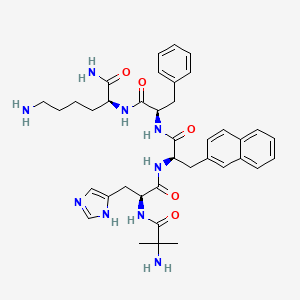
3D Structure

Chemical Properties
| CAS Number | 170851-70-4 |
|---|---|
| Molecular Formula | C38H49N9O5 |
| Molecular Weight | 711.9 g/mol |
| IUPAC Name |
(2S)-6-amino-2-[[(2R)-2-[[(2R)-2-[[(2S)-2-[(2-amino-2-methylpropanoyl)amino]-3-(1H-imidazol-5-yl)propanoyl]amino]-3-naphthalen-2-ylpropanoyl]amino]-3-phenylpropanoyl]amino]hexanamide
|
| InChIKey | NEHWBYHLYZGBNO-BVEPWEIPSA-N |
Research Applications
CJC-1295 No DAC with Ipamorelin: Research Applications
CJC-1295 No DAC with Ipamorelin is used in laboratory and preclinical research as a dual-pathway peptide system for studying growth hormone axis regulation, receptor synergy, and downstream IGF-1 signaling. The evidence base supporting its use draws from studies on CJC-1295, Ipamorelin, and established GHRH/GHRP co-stimulation models, collectively informing research into pulsatile endocrine signaling, metabolic pathway regulation, and tissue-level responses under controlled experimental conditions.
Hormone Signaling and Receptor Synergy
A primary research application of this blend is the investigation of complementary receptor activation within the somatotropic axis. CJC-1295 No DAC engages the GHRH receptor to stimulate cAMP-dependent signaling and pituitary growth hormone release, while Ipamorelin selectively targets GHSR-1a through the ghrelin receptor pathway. In paired secretagogue models, concurrent GHRH and GHRP activation has been shown to produce synergistic growth hormone release, reflecting two functionally distinct pathways that converge at the level of pituitary output. This makes the combination particularly well suited to mechanistic studies of receptor cross-talk, signal amplification, and pulse generation that single-receptor models cannot adequately replicate [2][3].
Of particular experimental value is the blend's capacity to preserve physiological pulsatility. CJC-1295 has been shown to elevate mean growth hormone and IGF-1 output while maintaining pulsatile secretion patterns rather than producing continuous hormone elevation [4]. This distinction is important because pulse timing, amplitude, and inter-burst recovery intervals each influence receptor responsiveness and downstream signaling behavior. Thus, the CJC-1295 No DAC with Ipamorelin blend serves as a useful model for examining how coordinated GHRH and ghrelin-receptor activation shapes the temporal architecture of endocrine rhythms under controlled conditions.
Skeletal Muscle Signaling and Protein Metabolism
A second major application involves skeletal muscle signaling and protein turnover. Growth hormone has a known influence on whole-body and muscle protein metabolism, with human metabolic studies demonstrating increased protein synthesis and reduced protein breakdown under elevated GH conditions [5]. Researchers use CJC-1295 No DAC with Ipamorelin as an upstream endocrine tool to examine how enhanced GH signaling affects amino acid handling, nitrogen economy, and the anabolic signaling networks of the GH/IGF-1 axis. In this context, the focus lies not on any direct peptide-to-muscle effect, but on how receptor-driven endocrine signaling remodels downstream muscle biology [6].
The IGF-1 arm of this axis carries particular weight in muscle research. Mechanistic literature demonstrates that IGF-1 supports satellite cell activation, myogenic differentiation, and regenerative remodeling, which is why IGF-1-linked markers are routinely tracked in preclinical studies involving this combination [7]. For this axis, relevant endpoints include phosphorylation of anabolic signaling intermediates, expression of muscle-regulatory genes, satellite cell activity, and indices of protein accretion or repair.
Taken together, CJC-1295 No DAC with Ipamorelin offers a practical research framework for studying how pulsatile endocrine input drives skeletal muscle maintenance and regeneration through the GH/IGF-1 pathway.
Lipid Metabolism and Energy Utilization
CJC-1295 No DAC with Ipamorelin holds research relevance in the study of lipid metabolism and energy substrate utilization due to growth hormone's well characterized role as a mediator of lipolysis. Experimental and human metabolic literature demonstrates that GH promotes fatty acid mobilization, shifts substrate preference toward fat oxidation, and alters carbohydrate-lipid partitioning during fasting and metabolic stress states, making GH secretagogue systems useful tools for investigating adipose tissue signaling, fuel selection, and the endocrine regulation of energy metabolism [8].
This research extends meaningfully beyond adipose tissue. Studies of acute GH exposure have shown increases in skeletal muscle mitochondrial oxidative capacity and upregulation of mitochondrial gene expression, indicating that upstream endocrine changes can meaningfully influence how peripheral tissues process available fuel.
Thus, CJC-1295 No DAC with Ipamorelin can be applied in metabolic research models to explore how coordinated GH-axis stimulation affects lipolysis, oxidative metabolism, and substrate utilization, with relevant biomarkers including free fatty acids, respiratory exchange patterns, and mitochondrial enzyme activity.
IGF-1 Signaling, Tissue Repair, and Recovery Models
The CJC-1295 No DAC with Ipamorelin blend finds further research application in tissue remodeling and recovery biology mediated through downstream IGF-1 signaling. IGF-1 is broadly implicated in cell proliferation, extracellular matrix organization, angiogenic signaling, and tissue regeneration, which is why GH-axis stimulation is frequently studied in relation to repair processes. Experimental literature has linked IGF-1 activity to keratinocyte migration, wound resolution, collagen organization, and improved healing outcomes across several preclinical models, making CJC-1295 No DAC with Ipamorelin relevant to investigations of how endocrine signaling shapes the molecular environment for tissue maintenance and restoration [9].
In connective tissue and skeletal muscle research settings, investigators typically follow markers such as collagen expression, satellite cell activation, growth-factor receptor dynamics, angiogenic mediators, and inflammatory signaling nodes. These observations are more accurately framed as pathway-level effects of GH/IGF-1 axis activation than as outcomes uniquely attributable to this peptide pair specifically. Even so, the combination provides a well-characterized experimental framework for connecting pulsatile pituitary output to peripheral tissue remodeling responses.
Sleep-Linked Endocrine Rhythms and Neuroendocrine Timing
A more specialized application concerns neuroendocrine timing and the relationship between growth hormone secretion and sleep architecture. Growth hormone release is closely coupled to slow-wave sleep, and the broader GHRH literature demonstrates that GHRH signaling can influence sleep-endocrine activity, particularly non-REM and slow-wave sleep parameters in controlled experimental settings [5]. CJC-1295 itself has been shown to preserve pulsatile GH secretion while increasing mean GH and IGF-1 output, establishing it as a useful instrument for studying endocrine rhythm structure rather than simple hormone elevation.
CJC-1295 No DAC with Ipamorelin may therefore find application in experimental models examining the interplay between peptide-driven GH signaling, circadian timing, and sleep-linked endocrine events. The strongest evidence in this domain supports the association between GHRH-related signaling, preserved pulsatility, and neuroendocrine rhythm research, but it's not definitive for this specific blend independently altering sleep architecture.
A better way to look at it is that this peptide blend is well suited for investigating how pulsatile GH-axis activation interacts with temporal endocrine organization across metabolic and recovery-related systems.
How CJC-1295 No DAC with Ipamorelin Works (Mechanism of Action)
CJC-1295 No DAC with Ipamorelin is a dual-peptide system used to study pulsatile endocrine signaling, pituitary hormone regulation, and downstream IGF-1-mediated metabolic pathways.
Target Engagement
CJC-1295 No DAC interacts with G protein-coupled GHRH receptors located on somatotroph cells in the anterior pituitary. Binding occurs at the extracellular domain of the receptor, initiating a signaling response consistent with endogenous GHRH ligands [4]. The absence of drug affinity complex modification results in a shorter receptor interaction window, allowing for transient activation that aligns with pulsatile signaling models.
Ipamorelin selectively binds to the GHSR-1a receptor, another G protein-coupled receptor involved in growth hormone regulation. Its sequence design incorporates non-natural amino acids that enhance receptor selectivity and reduce interaction with secondary endocrine pathways. Unlike earlier growth hormone secretagogues, Ipamorelin demonstrates a more targeted binding profile in receptor assays, making it useful for isolating ghrelin-mediated signaling mechanisms [6].
Downstream Signaling Pathways
Following receptor engagement, CJC-1295 No DAC activates adenylate cyclase through Gs protein coupling, increasing intracellular cyclic AMP levels. This leads to activation of protein kinase A and downstream transcriptional processes associated with growth hormone synthesis and release. In parallel, Ipamorelin activation of GHSR-1a initiates Gq-mediated signaling that elevates intracellular calcium levels, promoting vesicular secretion of growth hormone.
The combined effect of these pathways creates a coordinated signaling response in which cAMP-dependent transcriptional activity and calcium-mediated secretion processes converge. Experimental models show that this dual activation can influence both the magnitude and temporal pattern of growth hormone signaling, providing a framework for studying receptor synergy and signal integration [6].
Cellular Effects in Experimental Models
In biochemical and preclinical models, CJC-1295 No DAC with Ipamorelin is associated with measurable changes in endocrine and metabolic signaling markers. These include increased growth hormone release, modulation of IGF-1 expression, and activation of downstream pathways related to protein synthesis and energy metabolism.
Cell-based assays and animal studies also report changes in gene expression linked to anabolic signaling, lipid metabolism, and cellular repair processes. Additional observations include shifts in enzyme activity, substrate utilization, and mitochondrial function, reflecting the broader influence of growth hormone axis activation. These effects are studied as part of integrated endocrine signaling networks rather than as isolated outcomes, supporting investigation of how coordinated receptor activation shapes cellular responses in controlled experimental systems.
CJC-1295 No DAC with Ipamorelin Lab Safety & Handling Guidelines
CJC-1295 No DAC with Ipamorelin should be handled only in laboratory research environments using appropriate chemical safety procedures. This compound is typically supplied as a lyophilized peptide and should be stored at −4 °F (−20 °C) or below, protected from heat, moisture, and light. Maintaining controlled storage conditions helps preserve peptide structure, analytical purity, and chemical stability for consistent performance in experimental applications.
After reconstitution, peptide solutions are typically stored at 36–46 °F (2–8 °C). Proper handling and storage conditions help reduce degradation processes such as hydrolysis, oxidation, and peptide aggregation, supporting stability during short-term experimental use.
Handling Guidelines
Proper handling practices help maintain peptide integrity and experimental consistency.
- Store lyophilized material at −4 °F (−20 °C) or below
- Allow vial to reach room temperature before opening
- Protect from light, heat, and humidity
- Use sterile laboratory equipment during preparation
- Avoid repeated freeze–thaw cycles
- Label reconstituted samples with preparation date and concentration
These practices support reproducible results and help maintain material quality across experimental workflows.
Reconstitution Guidelines
Standard peptide preparation procedures should be followed to ensure proper solubilization and stability.
- Reconstitute with sterile bacteriostatic water or appropriate laboratory buffer
- Add solvent slowly along the vial wall to minimize foaming
- Avoid vigorous agitation or vortexing
- Gently swirl until the peptide is dissolved
- Store reconstituted solutions at 36–46 °F (2–8 °C)
- Prepare aliquots where appropriate to reduce freeze–thaw cycles
Careful reconstitution helps maintain peptide stability and supports consistent experimental outcomes.
Laboratory Safety Protocols
General chemical safety practices should be followed when handling research peptides.
- Wear PPE including gloves, lab coat, and protective eyewear
- Handle compounds within approved laboratory workspaces
- Avoid inhalation, ingestion, or direct contact
- Dispose of materials according to institutional chemical waste procedures
- Maintain proper labeling and documentation for stored research compounds
These practices support safe laboratory operation and regulatory compliance.
All products supplied by NewBioRx are intended strictly for laboratory research and development use only and are not approved for human or veterinary use.
Frequently Asked Questions
How does CJC-1295 No DAC with Ipamorelin affect growth hormone signaling pathways?
CJC-1295 No DAC with Ipamorelin modulates growth hormone signaling through dual receptor activation. CJC-1295 No DAC stimulates the GHRH receptor via cAMP-dependent pathways, while Ipamorelin activates the GHSR-1a receptor through calcium-mediated signaling. In laboratory models, this combined activity is used to study pulsatile hormone release, receptor synergy, and downstream IGF-1 pathway regulation in controlled endocrine systems.
What is the difference between CJC-1295 No DAC with Ipamorelin and CJC-1295 with DAC?
CJC-1295 No DAC with Ipamorelin differs from CJC-1295 with DAC in both structure and signaling profile. The DAC-modified version is designed for prolonged receptor engagement, while the No DAC form has a shorter activity window that supports pulsatile signaling studies. When combined with Ipamorelin, CJC-1295 No DAC enables investigation of coordinated receptor activation, whereas CJC-1295 with DAC is typically used to model sustained endocrine signaling.
Why combine CJC-1295 No DAC with Ipamorelin instead of using a single peptide?
CJC-1295 No DAC with Ipamorelin is used in research to examine how simultaneous activation of GHRH and ghrelin receptor pathways influences endocrine signaling. Single peptides target one pathway, while this combination enables study of receptor cross-talk, signal amplification, and pulse dynamics. In experimental systems, this dual approach provides a more representative model of coordinated growth hormone regulation compared to isolated receptor activation.
What experimental models are commonly used with CJC-1295 No DAC with Ipamorelin?
CJC-1295 No DAC with Ipamorelin is commonly used in in vitro receptor assays, pituitary cell culture models, and preclinical animal studies focused on endocrine signaling. Researchers use these systems to measure growth hormone release, receptor activation kinetics, IGF-1 expression, and downstream metabolic pathway activity. These models support investigation of hormone signaling dynamics and pathway integration in controlled laboratory environments.
What purity standards does NewBioRx maintain for CJC-1295 No DAC with Ipamorelin?
NewBioRx produces CJC-1295 No DAC with Ipamorelin using solid-phase peptide synthesis followed by high-performance liquid chromatography purification. Each batch is tested to confirm high chemical purity and consistency across production lots. These standards are designed to support reproducibility in receptor signaling studies, metabolic research, and other laboratory applications requiring well-characterized peptide materials.
Does NewBioRx provide Certificates of Analysis for each batch?
Yes, NewBioRx provides batch-specific Certificates of Analysis for CJC-1295 No DAC with Ipamorelin. These documents include analytical data such as HPLC chromatograms and mass spectrometry results to verify identity and purity. This documentation supports transparency and allows researchers to confirm that the material meets required specifications for experimental use.
Scientific References
1. Advances in the detection of growth hormone releasing hormone synthetic analogs, Memdouh S, Gavrilović I, Ng K, Cowan D, Abbate V, Drug Testing and Analysis (2021, Vol. 13, Issues 11–12, pp. 1871–1887). https://doi.org/10.1002/dta.3183
2. Growth hormone-releasing hormone receptor (GHRH-R) and its signaling, Halmos G, Szabo Z, Dobos N, Juhasz E, Schally AV, Reviews in Endocrine and Metabolic Disorders (2025, Vol. 26, Issue 3, pp. 343–352). https://doi.org/10.1007/s11154-025-09952-x
3. Growth hormone secretion elicited by GHRH, GHRP-6 or GHRH plus GHRP-6 in patients with microprolactinoma and macroprolactinoma before and after bromocriptine therapy, Popovic V, Simic M, Ilic V, Micic D, Damjanovic S, Djurovic M, Obradovic S, Dieguez C, Casanueva FF, Clinical Endocrinology (1998, Vol. 48, pp. 103–108). https://doi.org/10.1046/j.1365-2265.1998.00360.x
4. Pulsatile secretion of growth hormone (GH) persists during continuous stimulation by CJC-1295, a long-acting GH-releasing hormone analog, Ionescu M, Frohman LA, Journal of Clinical Endocrinology & Metabolism (2006, Vol. 91, Issue 12, pp. 4792–4797). https://doi.org/10.1210/jc.2006-1702
5. Normal Physiology of Growth Hormone in Normal Adults, Olarescu NC, Gunawardane K, Hanson TK, et al., Endotext (Updated 2025, MDText.com, Inc.). https://www.ncbi.nlm.nih.gov/books/NBK279056/
6. The Mechanism of Action and Synergy of CJC-1295 and Ipamorelin Peptide Blend, Perez BS, Iconic Research and Engineering Journals (2026, Vol. 9, Issue 7, pp. 2454–2461).
7. Mechanisms of IGF-1-Mediated Regulation of Skeletal Muscle Hypertrophy and Atrophy, Yoshida T, Delafontaine P, Cells (2020, Vol. 9, Issue 9, Article 1970). https://doi.org/10.3390/cells9091970
8. The effects of growth hormone on adipose tissue: old observations, new mechanisms, Kopchick JJ, Berryman DE, Puri V, Lee KY, Jorgensen JOL, Nature Reviews Endocrinology (2020, Vol. 16, Issue 3, pp. 135–146). https://doi.org/10.1038/s41574-019-0280-9
9. Insulin-like growth factor-I and wound healing, a potential answer to non-healing wounds: A systematic review of the literature and future perspectives, Garoufalia Z, Papadopetraki A, Karatza E, Vardakostas D, Philippou A, Kouraklis G, Mantas D, Biomedical Reports (2021, Vol. 15, Issue 2, Article 66). https://doi.org/10.3892/br.2021.1442