

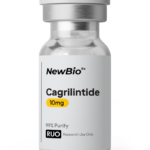
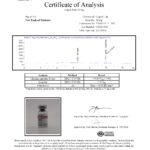
 COA
COA
What is Cagrilintide?
Cagrilintide is a synthetic peptide analog of the endogenous hormone amylin, a metabolic signaling peptide naturally co-secreted with insulin from pancreatic beta cells. In biological research, cagrilintide is studied for its interaction with amylin receptor complexes and calcitonin receptor–related signaling pathways involved in appetite regulation, nutrient sensing, and metabolic communication between the brain and peripheral tissues [1][2].
Amylin signaling plays an important role in satiety pathways and gastric motility regulation. As an engineered analogue, cagrilintide is designed to mimic key receptor-binding properties of native amylin while incorporating structural modifications that extend its activity and stability in experimental systems. These changes allow researchers to study amylin receptor signaling and related metabolic pathways over longer timeframes than would be possible with endogenous amylin alone [1].
Structurally, cagrilintide contains strategic amino-acid substitutions and a lipidated fatty-acid modification that increase resistance to enzymatic degradation and enable reversible albumin binding. These design features influence peptide stability, receptor interaction, and signaling persistence in laboratory models investigating neuroendocrine appetite regulation and metabolic communication pathways [1][2].
In experimental literature, cagrilintide is frequently examined in models exploring satiety signaling, gastric emptying pathways, and energy-balance regulation, particularly through brainstem amylin receptor systems associated with nutrient-sensing and appetite control networks [3]. Because these pathways influence food intake, fat metabolism, and glucose regulation, amylin analogues such as cagrilintide are commonly used in biochemical assays, receptor-binding studies, and metabolic signaling research [4][5].
Purity and Stability
Cagrilintide supplied by NewBioRx is produced using controlled solid-phase peptide synthesis (SPPS) designed to support precise molecular assembly and batch-to-batch consistency. As a lipidated amylin analogue, maintaining structural fidelity is particularly important because receptor binding and signaling activity depend on the peptide's engineered sequence modifications and lipidation profile [1].
Following synthesis, the peptide undergoes purification using high-performance liquid chromatography (HPLC) to verify chemical purity and remove synthesis byproducts or truncated peptide fragments. Analytical verification procedures confirm peptide identity and structural integrity, helping ensure reproducible physicochemical characteristics relevant to receptor-signaling assays and metabolic research applications.
Each production batch is third-party tested, and Certificates of Analysis are provided to document analytical verification, purity assessment, and identity confirmation. These quality-control measures help support consistent laboratory performance across experimental protocols.
Cagrilintide is supplied as research-grade material with ≥99.9% purity and is intended strictly for laboratory research use. This compound is not approved for human or veterinary applications.
Cagrilintide Structure
Cagrilintide belongs to the class of engineered amylin receptor agonist peptides. The molecule contains approximately 38 amino acids and incorporates targeted substitutions that enhance structural stability relative to native amylin. Modifications within the peptide backbone and sequence influence receptor binding behavior and resistance to enzymatic degradation in biochemical environments.
These structural features allow Cagrilintide to interact with amylin receptor complexes in laboratory systems while maintaining improved molecular stability during experimental assays.
Cagrilintide Chemical Structure
2D Structure

3D Structure

Chemical Properties and Registry Information for Cagrilintide
| Property | Information |
| Name & Synonyms | Cagrilintide; AM833; 0174-0839; long acting amylin analog |
| PubChem CID | 171397054 |
| CAS Number | 1415456-99-3 |
| Molecular Formula | C194H312N54O59S2 |
| Molecular Weight | 4409 g/mol |
| Peptide Length | 37 amino acids |
| Compound Class | Synthetic amylin analog peptide |
| Primary Targets | Amylin receptor complexes (AMY receptors) |
| Sequence | XKCNTATCATQRLAEFLRHSSNNFGPILPPTNVGSNTP |
| InChIKey | LDERDVMBIYGIOI-IZVMHKDJSA-N |
| IUPAC Name |
20-[[(1S)-4-[[(2S)-6-amino-1-[[(4R,7S,10S,13S,16S,19R)-4-[[(2S)-1-[[(2S,3R)-1-[[(2S)-5-amino-1-[[(2S)-1-[[(2R)-1-[[(2R)-1-[[(2S)-1-[[(2S)-1-[[(2S)-1-[[(2S)-1-[[(2S)-1-[[(2S)-1-[[(2S)-1-[[(2S)-4-amino-1-[[(2S)-4-amino-1-[[(2S)-1-[[2-[(2S)-2-[[(2S,3S)-1-[[(2R)-1-[(2R)-2-[(2R)-2-[[(2R,3S)-1-[[(2R)-4-amino-1-[[(2R)-1-[[2-[[(2R)-1-[[(2R)-4-amino-1-[[(2R,3S)-1-[(2R)-2-carbamoylpyrrolidin-1-yl]-3-hydroxy-1-oxobutan-2-yl]amino]-1,4-dioxobutan-2-yl]amino]-3-hydroxy-1-oxopropan-2-yl]amino]-2-oxoethyl]amino]-3-methyl-1-oxobutan-2-yl]amino]-1,4-dioxobutan-2-yl]amino]-3-hydroxy-1-oxobutan-2-yl]carbamoyl]pyrrolidine-1-carbonyl]pyrrolidin-1-yl]-4-methyl-1-oxopentan-2-yl]amino]-3-methyl-1-oxopentan-2-yl]carbamoyl]pyrrolidin-1-yl]-2-oxoethyl]amino]-1-oxo-3-phenylpropan-2-yl]amino]-1,4-dioxobutan-2-yl]amino]-1,4-dioxobutan-2-yl]amino]-3-hydroxy-1-oxopropan-2-yl]amino]-3-hydroxy-1-oxopropan-2-yl]amino]-3-(1H-imidazol-4-yl)-1-oxopropan-2-yl]amino]-5-carbamimidamido-1-oxopentan-2-yl]amino]-4-methyl-1-oxopentan-2-yl]amino]-1-oxo-3-phenylpropan-2-yl]amino]-4-carboxy-1-oxobutan-2-yl]amino]-1-oxopropan-2-yl]amino]-4-methyl-1-oxopentan-2-yl]amino]-5-carbamimidamido-1-oxopentan-2-yl]amino]-1,5-dioxopentan-2-yl]amino]-3-hydroxy-1-oxobutan-2-yl]amino]-1-oxopropan-2-yl]carbamoyl]-16-(2-amino-2-oxoethyl)-7,13-bis[(1R)-1-hydroxyethyl]-10-methyl-6,9,12,15,18-pentaoxo-1,2-dithia-5,8,11,14,17-pentazacycloicos-19-yl]amino]-1-oxohexan-2-yl]amino]-1-carboxy-4-oxobutyl]amino]-20-oxoicosanoic acid
|
|---|
Cagrilintide provides a useful experimental model for studying amylin receptor signaling and its interaction with broader metabolic regulatory pathways. Amylin receptors are heterodimeric complexes formed by the calcitonin receptor combined with receptor activity modifying proteins, creating multiple receptor subtypes with distinct signaling behavior.
Because Cagrilintide is a structurally modified amylin analog with enhanced stability, it allows researchers to investigate receptor activation dynamics and downstream signaling events in controlled biochemical systems with greater experimental consistency than native amylin peptides.
By enabling controlled investigation of amylin receptor activation and associated signaling pathways, Cagrilintide serves as a valuable tool for examining peptide hormone signaling mechanisms and receptor pharmacology within metabolic research systems.
Cagrilintide: Research Applications
Cagrilintide is used in controlled laboratory systems for studying receptor signaling, energy metabolism, and gut brain endocrine communication. In preclinical research, it is primarily applied to define how amylin receptor agonism alters feeding circuits, metabolic biomarkers, receptor trafficking, and peptide disposition across experimental models.
Weight Loss and Fat Reduction
Cagrilintide is studied in metabolic research for its effects on body weight, fat mass, and energy-balance signaling. As a long-acting amylin analogue, it is used in experimental systems to examine how amylin receptor activation influences food intake, satiety pathways, and downstream metabolic responses linked to adiposity [1][3]. This makes cagrilintide particularly relevant in research models focused on body composition and fat-mass regulation rather than simple changes in scale weight alone.
Preclinical and translational studies have examined cagrilintide in the context of body-weight reduction driven largely by reduced energy intake and altered metabolic signaling. Related mode-of-action work has evaluated changes in body weight, fat mass, lean mass, and feeding behavior in controlled models, helping researchers explore how amylin pathway activation reshapes whole-body metabolic phenotypes [4]. In these settings, cagrilintide is commonly used to investigate how receptor signaling influences fat distribution, body-composition changes, and broader metabolic adaptation.
Because appetite signaling, fat-mass regulation, and metabolic control are tightly linked, cagrilintide has become a useful research tool for studying how long-acting amylin agonism may influence weight-related biology and adipose-tissue function across integrated experimental systems [1][3][4].
Glycemic Control and Metabolic Health
Cagrilintide is also investigated in research related to glucose regulation and broader metabolic health. Amylin signaling is closely connected to nutrient handling, gastric motility, and postprandial metabolic responses, which makes cagrilintide relevant in experimental models examining glycemic control and endocrine-metabolic communication [1].
Clinical research has explored cagrilintide in combination with semaglutide in adults with overweight or obesity and type 2 diabetes, where treatment was associated with improvements in body weight and glycemic measures such as HbA1c [6]. These findings are important in research settings because they allow investigators to study how amylin-pathway activation may interact with other metabolic hormone systems to influence glucose-related biomarkers and overall metabolic state.
In laboratory and translational models, cagrilintide is therefore used to explore how peptide-mediated signaling affects glucose metabolism, energy regulation, and cross-talk between appetite pathways and peripheral metabolic tissues [4][6].
Appetite Regulation and Satiety Enhancement
One of the best-established research applications of cagrilintide involves appetite regulation and satiety signaling. Amylin receptor agonism plays a central role in nutrient-sensing pathways that influence meal size, fullness signaling, and food intake. Experimental work has shown that cagrilintide lowers body weight through brain amylin receptors, especially receptor systems involved in central appetite regulation [3].
This research is especially useful because it helps clarify how amylin-pathway activation influences feeding circuits and neuroendocrine communication between the gut, circulation, and brain. In experimental models, cagrilintide is used to study how receptor activation alters food intake patterns, satiety responses, and downstream signaling events related to appetite control [3][4].
Because these pathways are directly relevant to body-composition and obesity-related research, cagrilintide is commonly included in studies investigating appetite suppression, meal-related signaling, and the biological mechanisms that shape energy intake over time [1][3].
Cardiometabolic Benefits and Risk-Related Markers
Cagrilintide research also extends to cardiometabolic biology, especially where researchers are interested in the relationship between weight-related signaling, glycemic control, and broader metabolic risk markers. Since adiposity, glucose regulation, and lipid handling are closely connected, changes in amylin receptor signaling can be studied within a wider framework of cardiometabolic health [1][6].
Clinical combination studies have linked cagrilintide-based therapy with improvements in metabolic outcomes relevant to adults with overweight, obesity, and type 2 diabetes [6]. In research terms, these findings support the use of cagrilintide in models that examine how amylin signaling may affect not only body weight and glucose control, but also the larger network of metabolic pathways tied to cardiometabolic status.
This makes cagrilintide useful in experimental work focused on integrated metabolic physiology, particularly when researchers want to understand how appetite signaling, endocrine regulation, and energy metabolism interact across tissues [4][6].
Synergistic Effects in Combination Therapy
An important area of current cagrilintide research involves combination studies with other metabolic peptides, especially semaglutide. This work is valuable because it allows researchers to examine how amylin-pathway activation interacts with incretin-based signaling in multi-hormone metabolic systems [4][6].
Preclinical mode-of-action studies have shown that cagrilintide and closely related experimental compounds can produce additional effects when studied alongside semaglutide in diet-induced obesity models [4]. Clinical research has extended this concept by evaluating cagrilintide-semaglutide treatment in adults with overweight or obesity and type 2 diabetes, providing evidence that combined pathway engagement can improve both weight-related and glycemic outcomes [6].
For researchers, this combination framework is especially useful because it helps dissect whether amylin and incretin signaling act through overlapping or complementary mechanisms. As a result, cagrilintide is increasingly used in studies of multi-pathway metabolic regulation, appetite biology, and peptide-based endocrine signaling networks [4][6].
How Cagrilintide Works (Mechanism of Action)
Cagrilintide functions as a long acting synthetic analog of the peptide hormone amylin and is primarily studied as an agonist of amylin receptor complexes in experimental systems. In laboratory and preclinical research, Cagrilintide is used to investigate how activation of these receptors influences neuroendocrine signaling, energy metabolism, and metabolic communication between peripheral tissues and central nervous system regulatory centers.
Through receptor mediated signaling, Cagrilintide modulates pathways linked to appetite signaling circuits, gastrointestinal regulatory mechanisms, and broader metabolic feedback systems examined in controlled experimental models.
Target Engagement
Cagrilintide interacts with amylin receptor complexes that are formed when the calcitonin receptor associates with receptor activity modifying proteins known as RAMPs. These heterodimeric receptor assemblies generate multiple receptor subtypes, commonly referred to as AMY1, AMY2, and AMY3 receptors. Structural and pharmacological studies demonstrate that Cagrilintide binds these receptor complexes with high affinity in a manner that resembles endogenous amylin while incorporating modifications that increase peptide stability and prolong receptor engagement [2].
Experimental receptor binding assays indicate that Cagrilintide can activate both amylin receptor subtypes and the calcitonin receptor itself, producing measurable signaling responses in cellular assay systems. Structural studies using cryogenic electron microscopy have further shown that Cagrilintide stabilizes active receptor conformations that support downstream signaling through G protein coupled receptor pathways.
Downstream Signaling Pathways
Upon receptor binding, Cagrilintide activates intracellular signaling pathways associated with G protein coupled receptor activation. Amylin receptor signaling primarily engages Gs proteins, which stimulate adenylate cyclase and increase intracellular cyclic AMP concentrations. Elevated cyclic AMP can activate downstream signaling intermediates including protein kinase A and related phosphorylation cascades that regulate gene transcription and cellular metabolic responses.
In experimental systems, receptor activation by Cagrilintide has been associated with modulation of neuronal signaling pathways within hindbrain regions involved in metabolic regulation [1]. Additional signaling processes may involve calcium flux, kinase activation, and transcriptional changes that alter metabolic enzyme expression and neuroendocrine signaling networks.
Cellular Effects in Experimental Models
In biochemical assays and preclinical experimental models, Cagrilintide has been observed to influence several physiological signaling markers linked to metabolic regulation. Laboratory studies using rodent models demonstrate activation of neurons within hindbrain structures such as the area postrema and nucleus tractus solitarius following amylin receptor stimulation [1].
These brain regions play a role in nutrient sensing and endocrine feedback mechanisms. In cellular and animal models, Cagrilintide exposure has also been associated with measurable changes in metabolic biomarkers, alterations in feeding related signaling circuits, and modulation of pathways connected to gastric motility and energy balance [6].
These observations allow researchers to use Cagrilintide as a tool for examining how amylin receptor signaling integrates with broader endocrine and metabolic regulatory networks in experimental research systems.
Cagrilintide Lab Safety & Handling Guidelines
Cagrilintide should be handled only by qualified researchers and by following appropriate chemical safety procedures and institutional research protocols.
This compound is typically supplied as a lyophilized peptide and should be stored under controlled conditions to maintain chemical integrity. Long term storage is generally recommended at −4 °F (−20 °C), protected from heat, moisture, and light. Maintaining stable environmental conditions helps preserve peptide structure, analytical purity, and overall chemical stability for consistent laboratory research use.
After reconstitution, peptide solutions should be stored at 36–46 °F (2–8 °C). Proper handling during storage helps reduce degradation processes such as hydrolysis, oxidation, and peptide aggregation that may affect experimental consistency.
Handling Guidelines
Proper handling procedures help maintain peptide integrity during laboratory preparation and storage.
- Store lyophilized material at −4 °F (−20 °C) or below
- Allow vial to reach room temperature before opening
- Protect from light, heat, and humidity
- Use sterile laboratory equipment during preparation
- Avoid repeated freeze–thaw cycles
- Label reconstituted samples with preparation date and concentration
Following these practices supports reliable peptide handling and experimental reproducibility.
Reconstitution Guidelines
Standard peptide preparation procedures should be followed when preparing Cagrilintide solutions for laboratory use.
- Reconstitute with sterile bacteriostatic water or appropriate laboratory buffer
- Add solvent slowly along the vial wall to minimize foaming
- Avoid vigorous agitation or vortexing
- Gently swirl until the peptide is dissolved
- Store reconstituted solutions at 36–46 °F (2–8 °C)
- Prepare aliquots where appropriate to reduce freeze–thaw cycles
Careful preparation procedures help maintain peptide stability and solution consistency during laboratory experiments.
Laboratory Safety Protocols
General chemical safety practices should always be followed when handling research compounds.
- Wear PPE including gloves, lab coat, and protective eyewear
- Handle compounds within approved laboratory workspaces
- Avoid inhalation, ingestion, or direct contact
- Dispose of materials according to institutional chemical waste procedures
- Maintain proper labeling and documentation for stored research compounds
These practices support safe and compliant laboratory operation.
All products supplied by NewBioRx are intended strictly for laboratory research and development use only and are not approved for human or veterinary use.
Frequently Asked Questions
What purity level does Cagrilintide supplied by NewBioRx achieve?
Cagrilintide supplied by NewBioRx is produced using controlled peptide synthesis and purification processes to achieve over 99.9%+ purity, designed to support consistent laboratory research. Peptide identity and purity are verified by third-party labs using analytical techniques such as high performance liquid chromatography and complementary analytical methods, with Certificates of Analysis available for each batch
What receptors does Cagrilintide interact with in experimental systems?
Cagrilintide primarily interacts with amylin receptor complexes, which are formed when the calcitonin receptor associates with receptor activity modifying proteins known as RAMPs. These heterodimeric assemblies produce multiple receptor subtypes commonly referred to as AMY1, AMY2, and AMY3 receptors. Laboratory studies use these receptor systems to investigate peptide mediated signaling pathways involved in neuroendocrine communication, nutrient sensing, and metabolic regulation within experimental models.
How does Cagrilintide differ from native amylin in laboratory research?
Cagrilintide is a structurally modified analog of the endogenous hormone amylin designed to improve molecular stability and receptor engagement in experimental systems. Native amylin peptides are prone to aggregation and relatively rapid degradation under certain laboratory conditions. Cagrilintide incorporates targeted amino acid substitutions and structural modifications that enhance resistance to enzymatic breakdown and extend receptor signaling activity during biochemical and cellular assays.
What types of laboratory studies commonly use Cagrilintide?
Cagrilintide is frequently used in research investigating amylin receptor signaling and metabolic regulatory pathways. Common experimental systems include receptor binding assays, neuronal signaling studies, metabolic animal models, and biochemical pathway analysis. These research models allow investigators to examine peptide mediated signaling events, endocrine communication between tissues, and molecular mechanisms that influence energy metabolism and nutrient related signaling networks.
How should Cagrilintide be stored after reconstitution?
After reconstitution, peptide solutions are typically stored at refrigerated temperatures between 36–46 °F (2–8 °C). Proper storage conditions help maintain peptide stability and reduce degradation processes such as hydrolysis, oxidation, and aggregation. Researchers commonly prepare small aliquots of reconstituted solutions to minimize repeated freeze–thaw cycles that could affect peptide integrity during extended experimental workflows.
How does Cagrilintide compare with GLP-1 receptor agonist peptides in research models?
Cagrilintide activates amylin receptor complexes, whereas peptides such as semaglutide primarily target the GLP-1 receptor within incretin signaling pathways. Although these receptor systems are distinct, both participate in metabolic and endocrine communication networks studied in experimental models. Comparing Cagrilintide with GLP-1 receptor agonists allows researchers to examine how different peptide hormone pathways influence metabolic signaling, receptor pharmacology, and neuroendocrine regulatory mechanisms.
Regulatory & Legal (U.S.)
All products supplied by NewBioRx are intended strictly for research and development use. These materials are provided for laboratory investigation and scientific experimentation and are not supplied for use in humans or animals.
This product is not a drug, food, dietary supplement, medical device, or cosmetic. It has not been approved by the U.S. Food and Drug Administration (FDA) for medical, diagnostic, or therapeutic use. Any statements regarding the compound are derived from published scientific literature and have not been evaluated by the FDA. These materials are not intended to diagnose, treat, cure, or prevent any disease.
Materials supplied by NewBioRx must be handled only by qualified professionals trained in laboratory research procedures. The introduction of this product into humans or animals is strictly prohibited and may violate applicable laws and regulations.
Researchers and institutions are responsible for ensuring that the purchase, handling, storage, use, and disposal of research materials comply with all applicable federal, state, and local regulations, as well as institutional policies governing laboratory research.
Sources & References
1. Development of Cagrilintide, a Long-Acting Amylin Analogue. Kruse T, Hansen JL, Dahl K, Schäffer L, Sensfuss U, Poulsen C, Schlein M, Hansen AMK, Jeppesen CB, Dornonville de la Cour C, Clausen TR, Johansson E, Fulle S, Skyggebjerg RB, Raun K. Journal of Medicinal Chemistry, Aug 12, 2021; 64(15):11183–11194. Link: https://doi.org/10.1021/acs.jmedchem.1c00565
2. Structural and Dynamic Features of Cagrilintide Binding to Calcitonin and Amylin Receptors. Cao J, Belousoff MJ, Johnson RM, Keov P, Mariam Z, Deganutti G, Christopoulos G, Hick CA, Reedtz-Runge S, Glendorf T, Ballarín-González B, Raun K, Bayly-Jones C, Wootten D, Sexton PM. Nature Communications, Apr 10, 2025; 16(1):3389. Link: https://doi.org/10.1038/s41467-025-58680-y
3. Cagrilintide Lowers Bodyweight Through Brain Amylin Receptors 1 and 3. Carvas AO, Leuthardt A, Kulka P, Lommi G, Hassan S, Coester B, Lundh S, Pers T, Secher A, Raun K, Lutz TA, Le Foll C. EBioMedicine, Aug 2025; 118:105836. Link: https://doi.org/10.1016/j.ebiom.2025.105836
4. Characterization of 0839: A Tool Compound for Pre-Clinical Mode-of-Action Studies of Amylin Analogues Such as Cagrilintide. Gabery S, Glendorf T, Ballarin-Gonzalez B, Pedersen K, Kruse T, Raun K, Kuhre RE. Life Sciences, Oct 1, 2025; 378:123845. Link: https://doi.org/10.1016/j.lfs.2025.123845
5. In Vitro Metabolic Profiling of Weight-Loss-Inducing Amylin Receptor Agonists in the Context of Preventive Doping Research. Alhalabi H, Borschel L, Le Foll C, Thomas A, Bally L, Thevis M. Journal of Pharmaceutical and Biomedical Analysis, Jun 15, 2026; 273:117418. Link: https://doi.org/10.1016/j.jpba.2026.117418
6. Cagrilintide-Semaglutide in Adults with Overweight or Obesity and Type 2 Diabetes. Davies MJ, Bajaj HS, Broholm C, Eliasen A, Garvey WT, le Roux CW, Lingvay I, Lyndgaard CB, Rosenstock J, Pedersen SD; REDEFINE 2 Study Group. New England Journal of Medicine, Aug 14, 2025; 393(7):648–659. Link: https://doi.org/10.1056/NEJMoa2502082