


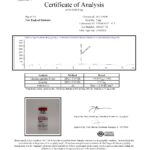
 COA
COA
What is AOD 9604?
AOD 9604 is a synthetic peptide derived from the C-terminal region of human growth hormone (GH fragment 176–191), structurally modified with an N-terminal tyrosine residue to enhance stability in experimental systems. Classified as a growth hormone–derived metabolic signaling peptide, AOD 9604 functions as a selective modulator of adipose tissue pathways, enabling targeted investigation of lipolysis without engagement of canonical growth hormone receptor signaling.
Structurally, AOD 9604 retains a disulfide-linked cyclic conformation formed by cysteine residues, preserving key features of the native GH region responsible for lipid metabolism signaling. This configuration supports receptor-level interaction within adipocytes while minimizing affinity for the growth hormone receptor, distinguishing it from full-length GH and preventing downstream IGF-1 pathway activation.
AOD 9604 (an abbreviation for Anti-Obesity Drug 9604) was first developed in the 1990s in Australia in the laboratory of Professor Frank Ng, a biochemist with a long research focus on growth hormone biology. By 1997, Ng and colleagues had identified the C-terminal segment of human GH as the primary region governing fat metabolism, and created AOD 9604 by adding a tyrosine residue to the fragment to enhance its stability. Development was carried forward by Metabolic Pharmaceuticals in collaboration with Monash University, with the stated goal of isolating the lipolytic properties of full-length HGH while eliminating its growth-promoting, IGF-1-elevating, and insulin-disrupting effects.
Trials conducted between 2001 and 2007 demonstrated statistically significant reductions in body fat, although the larger Phase IIb OPTIONS trial did not replicate these findings at sufficient magnitude for regulatory approval, and formal development was discontinued in 2007. The compound has since remained an active subject of preclinical research, particularly in the areas of lipid metabolism, adipose tissue signaling, and exploratory tissue repair models.
Mechanistically, AOD 9604 targets β3-adrenergic receptor signaling in adipose tissue models. Experimental data demonstrates upregulation of β3-adrenergic receptor expression and restoration of lipolytic responsiveness in systems where this pathway is suppressed. Functional studies in receptor-deficient models further confirm that β3-adrenergic signaling is essential to its activity, positioning AOD 9604 as a tool for dissecting receptor-mediated lipid mobilization [1].
At the metabolic level, AOD 9604 promotes triglyceride hydrolysis while concurrently reducing lipogenic activity through modulation of enzymes such as acetyl-CoA carboxylase. This dual-action profile enables controlled study of fatty acid mobilization and storage regulation within preclinical and in vitro models.
Purity & Quality
NewBioRx supplies high-purity AOD 9604 produced using controlled solid-phase peptide synthesis and high-resolution HPLC purification to ensure high chemical purity and structural integrity across batches. Each lot undergoes defined quality control workflows, including chromatographic purity profiling and mass spectrometry for identity confirmation, supporting accurate sequence verification and molecular consistency.
In addition to these, NewBioRx applies stringent QA/QC systems with lot-level testing, traceability, and documented analytical specifications, aligning with established molecular reagent quality standards and reproducibility requirements.
This framework supports reliable physicochemical performance, including solubility behavior and stability in experimental conditions, enabling consistent results in signaling, metabolic, and biochemical assays. AOD 9604 peptide with confidence for research in lipid metabolism, adipose tissue signaling, and metabolic pathway investigation.
Note: This material is supplied for laboratory research use only and is not intended for human or veterinary use.
AOD 9604: Chemical Identity
AOD 9604 is a synthetic growth hormone–derived peptide fragment corresponding to the C-terminal lipolytic region of human GH, with an additional N-terminal tyrosine residue incorporated to improve structural stability in laboratory systems. The molecule contains a cysteine-linked disulfide bridge that constrains the peptide into a cyclic conformation, an important feature for maintaining its signaling profile in biochemical and adipocyte-based assays.
As a modified peptide analog rather than a full receptor-active growth hormone construct, AOD 9604 is distinguished by its selective interaction with metabolic signaling pathways associated with lipid mobilization rather than canonical GH receptor activation. This makes AOD 9604 useful for studying peptide-mediated regulation of adipose signaling in controlled experimental models.
Chemical Structure
2D Structure

3D Structure

AOD 9604: Chemical Properties
| Property | Description |
| Name & Synonyms | AOD9604, Tyr-somatostatin (177-191) |
| PubChem CID | 71300630 |
| CAS Number | 221231-10-3 |
| Molecular Formula | C78H123N23O23S2 |
| Molecular Weight | 1815.1 g/mol |
| Peptide Length | 16 amino acids |
| Compound Class | Synthetic growth hormone–derived peptide fragment |
| Primary Targets | β3-adrenergic receptor–linked adipose signaling pathways |
| InChIKey | GVIYUKXRXPXMQM-BPXGDYAESA-N |
| IUPAC Name |
L-tyrosyl-L-leucyl-L-arginyl-L-isoleucyl-L-valyl-L-glutaminyl-L-cysteinyl-L-arginyl-L-seryl-L-valyl-L-alpha-glutamyl-glycyl-L-seryl-L-cysteinyl-glycyl-L-phenylalanine (7->14)-disulfide
|
|---|
AOD 9604 Research Applications
AOD 9604 is used as a research tool in controlled laboratory systems to investigate lipid metabolism, receptor signaling, and adipose tissue biology. As a growth hormone–derived peptide fragment that operates independently of classical GH receptor pathways, AOD 9604 enables targeted study of metabolic signaling mechanisms without engagement of IGF-1–mediated endocrine effects.
Lipid Metabolism and Adipose Tissue Biology
AOD 9604 is most extensively studied in relation to lipid metabolism and adipose tissue signaling. Experimental models demonstrate that AOD 9604 modulates lipolysis through β3-adrenergic receptor–mediated pathways, which are central to triglyceride breakdown in adipocytes. In vitro assays show increased glycerol release from adipose tissue following exposure to AOD 9604, a widely used biochemical marker of active lipolysis [1].
Preclinical studies in obese animal models further indicate that AOD 9604 enhances lipolytic activity within adipose tissue, with preferential effects observed in metabolically dysregulated fat cells [2]. Mechanistic investigations have shown that AOD 9604 increases β3-adrenergic receptor expression at the mRNA level, restoring receptor density in systems where lipolytic responsiveness is impaired. Functional validation using receptor-deficient models confirms that β3-adrenergic signaling is required for these effects, as disruption of this pathway attenuates peptide-induced lipolysis.
At the enzymatic level, AOD 9604 has been shown to promote triglyceride hydrolysis while inhibiting lipogenesis through modulation of acetyl-CoA carboxylase activity. This dual mechanism supports investigation of how lipid mobilization and synthesis are regulated within adipocytes. Additional assays commonly measure fatty acid oxidation rates, intracellular lipid accumulation, and downstream signaling intermediates such as cyclic AMP and protein kinase A activation.
Energy Balance and Metabolic Signaling
AOD 9604 is also applied in studies examining broader energy metabolism and substrate utilization. Experimental systems have been used to evaluate how AOD 9604 influences energy balance under controlled dietary and metabolic conditions [1].
Biochemical and preclinical investigations suggest that AOD 9604 affects pathways involved in cellular energy regulation, including cyclic AMP signaling and downstream kinase activation. These pathways are typically assessed using phosphorylation assays, metabolic flux analysis, and gene expression profiling in adipose and related tissues.
In animal models, researchers measure parameters such as circulating free fatty acids, respiratory exchange ratios, and adipose tissue gene expression to characterize shifts in substrate utilization. These models provide insight into how AOD 9604 influences the partitioning of energy substrates between storage and oxidation, particularly within adipose tissue.
Importantly, experimental observations consistently show that AOD 9604 does not activate the growth hormone receptor or alter IGF-1 signaling pathways [4]. This allows researchers to isolate metabolic signaling effects without confounding endocrine responses, making AOD 9604 a useful model for studying localized metabolic regulation.
Glucose Signaling and Endocrine Pathways
AOD 9604 has been investigated in laboratory models assessing glucose metabolism and endocrine signaling. Unlike full-length growth hormone, which is associated with alterations in insulin sensitivity in experimental systems, AOD 9604 demonstrates a distinct signaling profile [2].
Preclinical studies using metabolic assays such as euglycemic clamp techniques indicate that AOD 9604 does not impair insulin-mediated glucose uptake in adipose or peripheral tissues. Additional experimental models incorporating glucose tolerance testing and fasting biomarker analysis show no significant changes in plasma glucose or insulin levels following exposure to AOD 9604.
These findings support the use of AOD 9604 as a research tool for examining lipid metabolism independently of glucose regulatory disruption. The absence of IGF-1 pathway activation is also consistently observed across experimental systems, reinforcing its value in studies requiring separation of metabolic and growth-related signaling pathways.
Hormone Signaling and Receptor Pharmacology
AOD 9604 is frequently used to investigate selective peptide signaling and receptor pharmacology. As a modified fragment of human growth hormone, it provides a model system for studying how specific peptide domains influence receptor interaction and downstream signaling.
Receptor binding and signaling assays demonstrate that AOD 9604 does not activate the growth hormone receptor, distinguishing it from full-length GH. Instead, its activity is associated with adrenergic receptor–linked pathways in adipocytes. This selective signaling behavior allows researchers to examine how peptide fragments can retain specific biological functions while avoiding broader receptor activation.
Experimental approaches in this area often include second messenger analysis, such as cyclic AMP quantification, as well as kinase activation profiling and transcriptional response studies. These methods help define how AOD 9604 interacts with cellular signaling networks at the molecular level.
Cartilage and Tissue Remodeling Models
In addition to metabolic research, AOD 9604 has been explored in preclinical models of cartilage biology and tissue remodeling. Laboratory studies using chondrocyte cultures and animal models have investigated how the peptide influences pathways involved in extracellular matrix regulation and tissue repair [4].
Experimental observations indicate that AOD 9604 may affect cellular processes such as matrix synthesis and structural integrity in cartilage tissue. Histological and biochemical analyses in animal models show reduced markers of cartilage degradation in systems exposed to the peptide compared to controls.
Some studies have evaluated AOD 9604 in combination with other compounds, such as hyaluronic acid, to assess interactions between structural support systems and peptide-mediated signaling. These experimental frameworks are used to investigate how multiple pathways contribute to tissue remodeling and cellular differentiation processes under controlled conditions.
Overall, AOD 9604 serves as a focused experimental tool for studying lipid metabolism, receptor signaling, and cellular energy regulation. Its selective interaction with β3-adrenergic pathways, combined with minimal engagement of classical growth hormone signaling, allows researchers to investigate metabolic processes with a high degree of pathway specificity in laboratory and preclinical models.
How AOD 9604 Works (Mechanism of Action)
AOD 9604 is a growth hormone–derived peptide fragment that modulates adipose tissue metabolism through selective interaction with β3-adrenergic receptor–associated signaling pathways. Rather than activating the growth hormone receptor, AOD 9604 functions as a pathway-specific modulator of lipid metabolism, enabling investigation of lipolysis and energy regulation in experimental systems without engagement of IGF-1–mediated endocrine signaling.
Target Engagement
AOD 9604 interacts with adipocyte signaling systems in a manner that is functionally linked to β3-adrenergic receptor pathways [1]. While direct receptor binding affinity remains an area of ongoing investigation, experimental evidence indicates that AOD 9604 enhances β3-adrenergic receptor expression and signaling capacity in adipose tissue models. This modulation appears selective, as AOD 9604 does not activate the growth hormone receptor or induce downstream IGF-1 signaling.
Mechanistic studies in preclinical models demonstrate that the presence of functional β3-adrenergic receptors is required for AOD 9604 activity. In receptor-deficient systems, the peptide does not produce measurable changes in lipolytic signaling, supporting the conclusion that its effects are mediated through adrenergic pathway engagement rather than direct hormone receptor activation.
Downstream Signaling Pathways
Following target engagement, AOD 9604 influences intracellular signaling cascades associated with lipid metabolism. Experimental models show increased cyclic AMP levels in adipocytes, indicating activation of second messenger systems typically linked to β-adrenergic signaling. Elevated cAMP leads to activation of protein kinase A, which regulates key enzymes involved in triglyceride breakdown.
In parallel, AOD 9604 has been shown to modulate enzymes involved in lipid synthesis, including acetyl-CoA carboxylase. Reduction in the activity of this enzyme decreases the conversion of substrates into fatty acids, thereby shifting cellular metabolism toward lipid mobilization rather than storage [1]. These signaling events are commonly assessed using enzyme activity assays, phosphorylation analysis, and gene expression profiling in laboratory systems.
Cellular Effects in Experimental Models
In vitro and preclinical studies using AOD 9604 demonstrate measurable effects on adipocyte metabolism and cellular energy regulation. Biochemical assays show increased glycerol release, reflecting enhanced lipolysis, alongside reductions in intracellular lipid accumulation. These findings are supported by gene expression data indicating upregulation of lipolytic markers and β3-adrenergic receptor transcripts.
Animal models further demonstrate changes in adipose tissue signaling consistent with increased fatty acid mobilization and oxidation. Importantly, these effects occur without activation of growth hormone receptor pathways or alteration of IGF-1 signaling, allowing AOD 9604 to be used as a tool for isolating metabolic signaling mechanisms.
Collectively, these observations position AOD 9604 as a selective modulator of adipose tissue signaling, enabling detailed study of receptor-mediated lipid metabolism and downstream cellular responses in controlled experimental models.
AOD 9604 Lab Safety & Handling Guidelines
AOD 9604 should be handled by researchers using established chemical safety procedures. This peptide is supplied as a lyophilized material and should be stored at −4 °F (−20 °C) or below, protected from heat, moisture, and light. Maintaining controlled storage conditions helps preserve peptide structure, analytical purity, and chemical stability, ensuring reliable performance in experimental applications.
After reconstitution, AOD 9604 solutions are typically stored at 36–46 °F (2–8 °C). Proper handling and storage help minimize degradation processes such as hydrolysis, oxidation, and peptide aggregation, which can affect experimental consistency.
Handling Guidelines
Proper handling is essential to maintain peptide integrity and experimental reliability.
- Store lyophilized material at −4 °F (−20 °C) or below
- Allow vial to reach room temperature before opening
- Protect from light, heat, and humidity
- Use sterile laboratory equipment during preparation
- Avoid repeated freeze–thaw cycles
- Label reconstituted samples with preparation date and concentration
Following these practices helps support consistent and reproducible laboratory results.
Reconstitution Guidelines
Standard peptide preparation procedures should be followed to maintain solution stability.
- Reconstitute with sterile bacteriostatic water or appropriate laboratory buffer
- Add solvent slowly along the vial wall to minimize foaming
- Avoid vigorous agitation or vortexing
- Gently swirl until the peptide is dissolved
- Store reconstituted solutions at 36–46 °F (2–8 °C)
- Prepare aliquots where appropriate to reduce freeze–thaw cycles
Careful reconstitution supports peptide stability and preserves functional integrity in experimental systems.
Laboratory Safety Protocols
General chemical safety practices should be followed when handling AOD 9604.
- Wear PPE including gloves, lab coat, and protective eyewear
- Handle compounds within approved laboratory workspaces
- Avoid inhalation, ingestion, or direct contact
- Dispose of materials according to institutional chemical waste procedures
- Maintain proper labeling and documentation for stored research compounds
These practices support safe and controlled laboratory operation.
All products supplied by NewBioRx are intended strictly for laboratory research and development use only and are not approved for human or veterinary use.
Frequently Asked Questions
What is AOD 9604 used for in research?
AOD 9604 is used as a laboratory research compound to study lipid metabolism, adipose tissue signaling, and β3-adrenergic receptor–associated pathways. Researchers use AOD 9604 in adipocyte assays, biochemical studies, and preclinical models to investigate lipolysis, fatty acid mobilization, and metabolic pathway regulation without activating the full growth hormone signaling cascade.
How does AOD 9604 differ from growth hormone and GHRH analogues?
AOD 9604 differs from full-length growth hormone and GHRH analogues in that it does not activate the growth hormone receptor or stimulate endogenous GH release. Instead, AOD 9604 is used to study downstream metabolic signaling, particularly adipose tissue lipolysis, allowing researchers to isolate lipid metabolism pathways without engaging the broader endocrine GH–IGF-1 axis.
What signaling pathways does AOD 9604 primarily affect?
AOD 9604 primarily affects pathways associated with lipid metabolism, including β3-adrenergic receptor signaling, cyclic AMP–mediated cascades, and enzyme systems involved in lipolysis and lipogenesis. These pathways are commonly studied in experimental models to understand how peptide signaling influences adipocyte function and energy metabolism.
What types of experimental systems are commonly used with AOD 9604?
AOD 9604 is commonly used in in vitro adipocyte models, biochemical enzyme assays, and preclinical animal studies focused on metabolic research. These systems allow researchers to measure endpoints such as glycerol release, fatty acid oxidation, gene expression changes, and receptor signaling activity under controlled laboratory conditions.
How is AOD 9604 purity and identity verified?
AOD 9604 is synthesized using controlled solid-phase peptide synthesis and purified via HPLC to achieve high chemical purity. Analytical verification typically includes chromatographic purity assessment and mass spectrometry–based identity confirmation. NewBioRx provides batch-specific Certificates of Analysis to support reproducibility and consistency in laboratory research applications.
Scientific References
1. The Effects of Human GH and Its Lipolytic Fragment (AOD9604) on Lipid Metabolism Following Chronic Treatment in Obese Mice and β3-AR Knock-Out Mice, Mark Heffernan, Roger J. Summers, Anne Thorburn, Esra Ogru, Robert Gianello, Woei-Jia Jiang, Frank M. Ng, Journal (Endocrinology, Volume 142, Issue 12, December 2001, Pages 5182–5189). Link: https://doi.org/10.1210/endo.142.12.8522
2. Obesity Pharmacotherapy: Current Perspectives and Future Directions, Misra M., Journal (Current Cardiology Reviews, Volume 9, Issue 1, February 2013, Pages 33–54). Link: https://doi.org/10.2174/157340313805076322
3. Safety and Tolerability of the Hexadecapeptide AOD9604 in Humans, Stier H., Vos E., Kenley D., Journal (Journal of Endocrinology and Metabolism, Volume 3, Issues 1–2, 2013, Pages 7–15). Link: https://www.jofem.org/index.php/jofem/article/view/157/194
4. Peptides for Targeting Chondrogenic Induction and Cartilage Regeneration in Osteoarthritis, Liao H.J., Chen H.T., Chang C.H., Journal (Cartilage, September 2024, Epub ahead of print). Link: https://doi.org/10.1177/19476035241276406